I use Obsidian for pretty much all text, but I find it a little to slow sometimes for when I just need to jot some things down on a digital scrap piece of paper. I normally use Drafts for this, but Gravity is a really nice app that I'm taking for a spin.
Fan out prompts to multiple AI coding agents in parallel. counselors dispatches the same prompt to Claude, Codex, Gemini, Amp, or custom tools simultaneously, collects their responses, and writes everything to a structured output directory. No MCP servers, no direct API integrations, no complex configuration. It just calls your locally installed CLI tools.
Just heard about this on the latest episode of Mostly Technical podcast - a deceptively simple idea that could be insanely powerful.
Thursday, 19 February 2026
| www.currentreader.app
I’m still enjoying the switch to NetNewsWire for my RSS feeds, but this new app - intentionally designed to not look like every other RSS reader experience out there - is very interesting.
I've been watching this project for some time and been looking for an excuse to use this HTML-first UI library, so have decided to use it as a jumping-off point for the redesign of this website. No use of the web components at the moment, but can definitely see myself using <kelp-toc> at some point.
I've been a loyal user of Reeder (more specifically Reeder Classic as it has now become) for many years, but today I decided to give NetNewsWire a go. The 'Today' smart feed is exactly what I've been looking for - before today I was considering resurrecting Subworthy to add a more ethemeral / temporal aspect to my feeds (I may still).
But the reality is that 75% of the people on our engineering team lost their jobs here yesterday because of the brutal impact AI has had on our business.
Could this be the beginning of the end for the CSS framework? Maybe it's time for Laravel Holdings Inc. to buy / bail them out?
UPDATE: Looks like Vercel and Google AI already swooped in to save the day, as it were. No word of the Tailwind employees that lost their jobs, though.
...in the name of evolution, there seems to be mistaken thinking that the process of building a website needs to get more complex, using Javascript frameworks and modern backend systems; when at the end of the day, browsers still only need static HTML content to interpret.
There’s so much in this piece that echoes my current thinking about building for the web - things have gotten way more complex than they need to be.
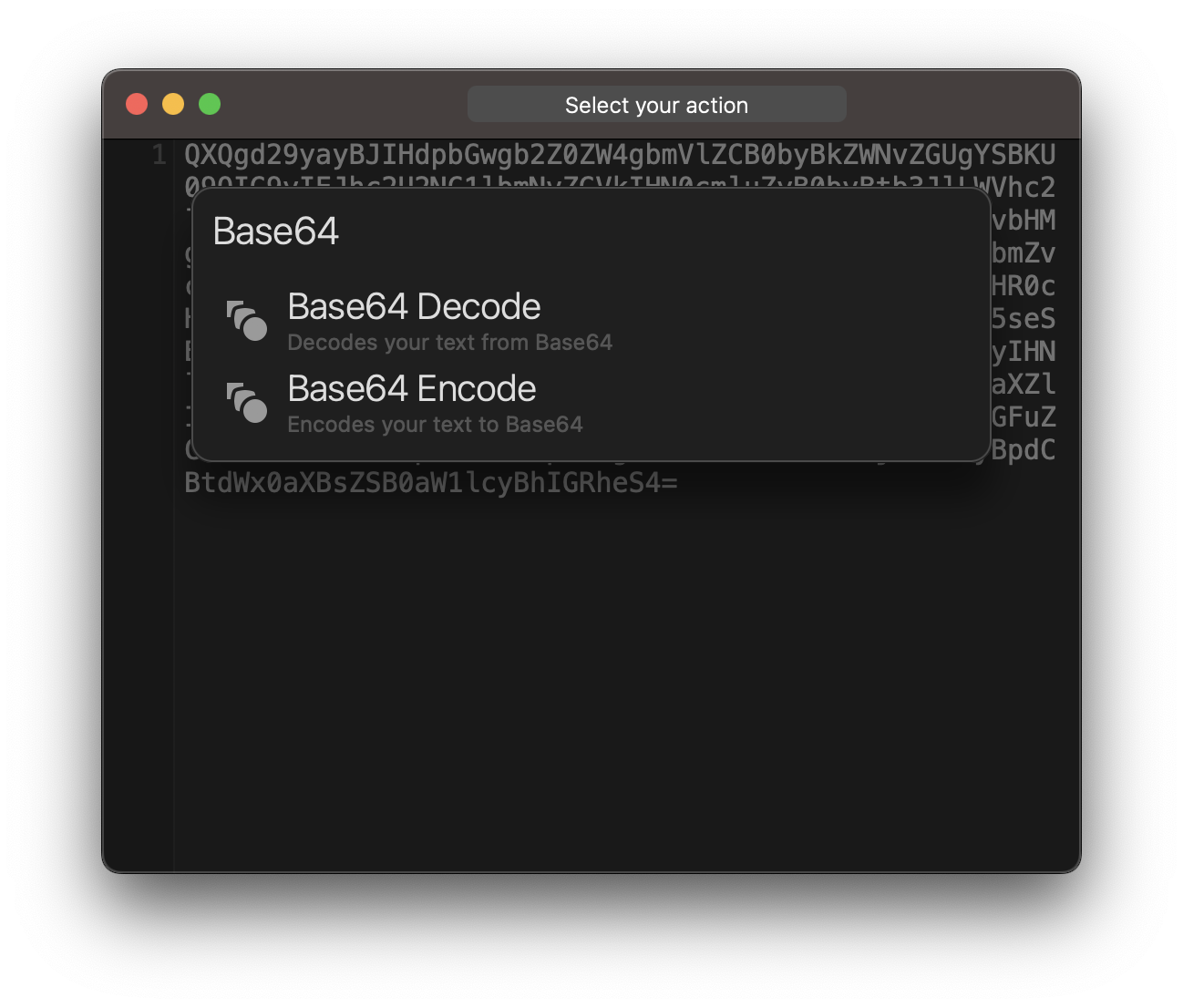
At work I will often need to decode a JSON or Base64-encoded string to more-easily examine the data. Using online tools like jsonformatter.org and base64decode.org are certainly convenient, but not exactly great for security.
Boop is a fantastic native desktop tool for doing all of that (and much more). I find myself launching it multiple times a day.
It’s like a consortium of sketchy pawn shops complaining to the authorities after a popular retailer successfully cracked down on an organized shoplifting/pickpocketing ring, and the authorities then fining the retailer for the damage to the pawnbrokers’ business fencing stolen goods — and for exposing the police as ineffective.
This decision by French authorities melts my brain, and another reason for Apple (who are far from perfect in many respects) to ask “why do we even bother?”.
Faced with the relentless, myopic, growth-at-all-costs optimism that seems to surround our tech overlords and their toys, all I can think is that I'd rather give up 99% of the consumer-tech "improvements" to go back to a world where things felt a little bit harder, and a lot more human.
This perfectly encapsulates a feeling of uneasiness that has been growing in the back of my head. I need more time to contemplate what this all means to me and how I intend to address it, but this from Scott Boms is a good start:
I miss being excited by technology. I wish I could see a way out of the endless hype cycles that continue to elicit little more than cynicism from me. The version of technology that we’re mostly being sold today has almost nothing to do with improving lives, but instead stuffing the pockets of those who already need for nothing. It’s not making us smarter. It’s not helping heal a damaged planet. It’s not making us happier or more generous towards each other. And it’s entrenched in everything — meaning a momentous challenge to re-wire or meticulously disconnect. I’m slowly finding my own ways of breaking free to regain a sense of self and purpose.
In 2021 Netflix announced that it would start releasing a new original movie every week. A certain style soon began to take shape, a mind-numbing anticinema that anyone who has subscribed to Netflix in recent years knows by sight. I’ll call it the Typical Netflix Movie (TNM).
I’m not a huge Netflix viewer - I mainly use it to watch ‘mainstream’ movies that make it onto the platform, plus the occasional comedy special or documentary.
I was recently recommended Black Doves, the Keira Knightley thriller that is undoubtedly Netflix’s answer to the excellent Slow Horses on Apple TV+. Whilst it is a series as oppose to a movie, it still has all the hallmarks of the Typical Netflix Movie.
The characters’ dialogue is stilted, filled with overexplanation, clichés, and lingo no human would ever use, like two bots stuck in a loop.
Despite the implausible and unmemorable plot, the real deal-breaker for me was a particular piece of dialogue. At numerous points throughout the series, English characters wish each other “Happy Christmas”. Here’s the thing, no one from the UK wishes people “Happy Christmas” - it’s “Merry Christmas” (and a happy New Year) - and it’s jarring every time a character says it.
Meishi embodies Rams’s principle of “less but better” by enforcing limits. Each card represents a commitment to do fewer things, but do them well. Most satisfying of all is that by solving this particular problem, I’ve found that small solutions can lead to big impact.
Aside from the fact that this requires the carrying of a pen / pencil, I do like the idea of this minimal (literally) productivity system. I’m considering a more analogue method of managing my to-do list, and the Ugmonk Analog system that inspired this is definitely up for consideration.
Writing is the superpower of humankind. It is our truest form of magic.
Writing allows you to conjure up something of value where nothing previously existed. It costs little for you to write down the lessons of your life and yet those few minutes spent writing can be life-altering for the right reader. As I once saw it put: “there is someone out there with a wound in the exact shape of your words.”
Furthermore, writing is the foundation of nearly every technology and innovation because we have to record what we know before we can build upon it. And these innovations are passed down from generation to generation, allowing our children to inherit a richer intellectual fortune than what we were born into. The world is richer because we write and nobody is made poorer in the process.
This sums up perfectly why I am intent on building my writing habit 2025.
Prior to the Gregorian calendar, farmers in China and Japan broke each year down into 24 sekki or “small seasons”. These seasons didn't use dates to mark seasons, but instead, they divided up the year by natural phenomena
As someone who has moved from the northern hemisphere to the southern hemisphere and had their seasons shifted against the calendar year (and those seasons are so much more extreme and unrecognisable to what we experienced in the UK) I love the idea of taking a completely different view on the passage of time throughout the year.