Vibe-coding and reinventing the wheel
Posted 30 January 2026
I came across a LinkedIn post today that stuck with me.
A CEO shared how he had used Clawdbot Moltbot OpenClaw to create a small macOS app. He has a simple goal - to able to easily insert emojis into text without his hands leaving the keyboard. He opted for typing Slack-style emoji shortcuts like :emoji: and have them expand into actual emojis. He was upfront about it being a niche use case. It only saved him a few minutes a day. Still, he was clearly proud of the process. Over the course of a morning, in between meetings, he iterated on the idea using the self-hosted chatbot and ended up with something that worked.
The comments were full of praise. People loved the initiative - a few even asked if he could share the app.
Buried a little deeper in the thread, though, someone pointed out that macOS already has a built-in emoji picker, accessible via a keyboard shortcut. That alone makes the whole exercise questionable if the goal is pure productivity.
But there is a more important detail that never really landed in the discussion.
There is already an app that does exactly what he built. It's called Rocket. It has been around for years. I use it every single day. You type :fire: or :thumbsup: and it expands to an emoji in any app. It's fast, polished, and solved.
That's where this story stopped being charming and started raising a bigger question for me. Why are we so quick to reach for AI to re-solve problems that already have good, boring, well-tested solutions?
I don't think this is about saving time. In this case, the AI-assisted approach objectively took longer. A quick search would have turned up Rocket in under a minute. Instead, he spent a morning iterating, plus however many Claude API tokens went up in smoke along the way. Ironically, even ChatGPT would have pointed him straight to the existing app and saved the effort entirely (I checked).
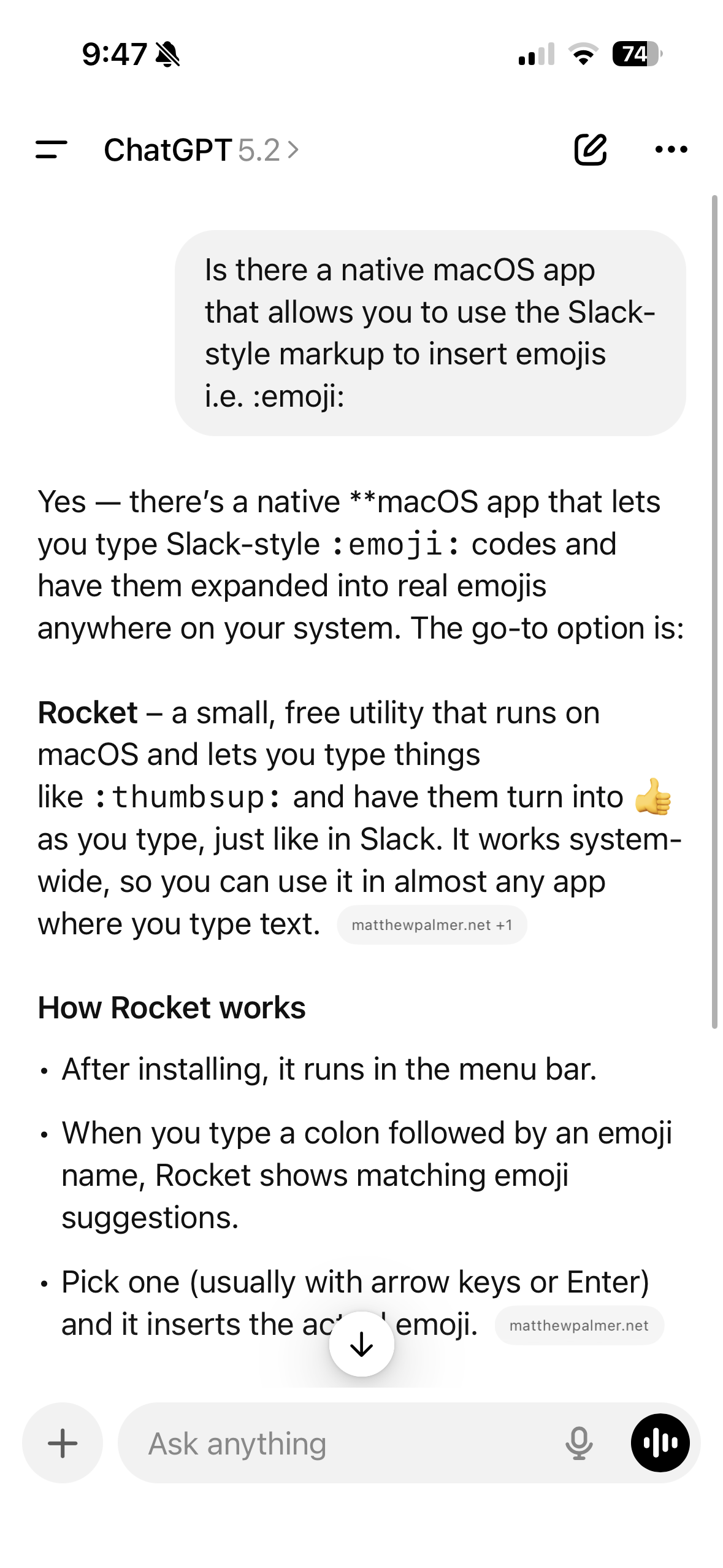
So what's really going on here?
Part of it might be laziness, but not the obvious kind. Not "I don't want to do the work" but "I don't want to stop and look around". There's a subtle friction to researching existing tools. It feels slower than just building something, especially when AI makes building feel playful and low-risk.
I think there's also a bit of developer hubris mixed in. The quiet assumption that rebuilding something yourself is inherently better, or at least more interesting, than adopting what already exists. We've all felt it. The pull to reinvent the wheel because we can, not because we should.
To be clear, I'm not anti-experimentation. Hacking on small tools for fun or learning is great. Using AI as a thinking partner can be genuinely powerful. But there's a difference between experimenting and mistaking novelty for progress.
As builders and leaders, part of our job is knowing when not to build. When to pause, scan the landscape, and recognise that someone else already solved this problem years ago. Often better than we will in a single morning.
AI lowers the cost of creation, which is exciting. But it doesn't remove the need for judgment. If anything, it makes that judgment more important. Otherwise, we risk spending more time, more money, and more energy enthusiastically rebuilding things we already have.
P.S. If you haven't already, you should download Rocket. You can even support the indie-developer by upgrading to the Pro version for $10.
Email a comment